ABOUT THE STUDIO
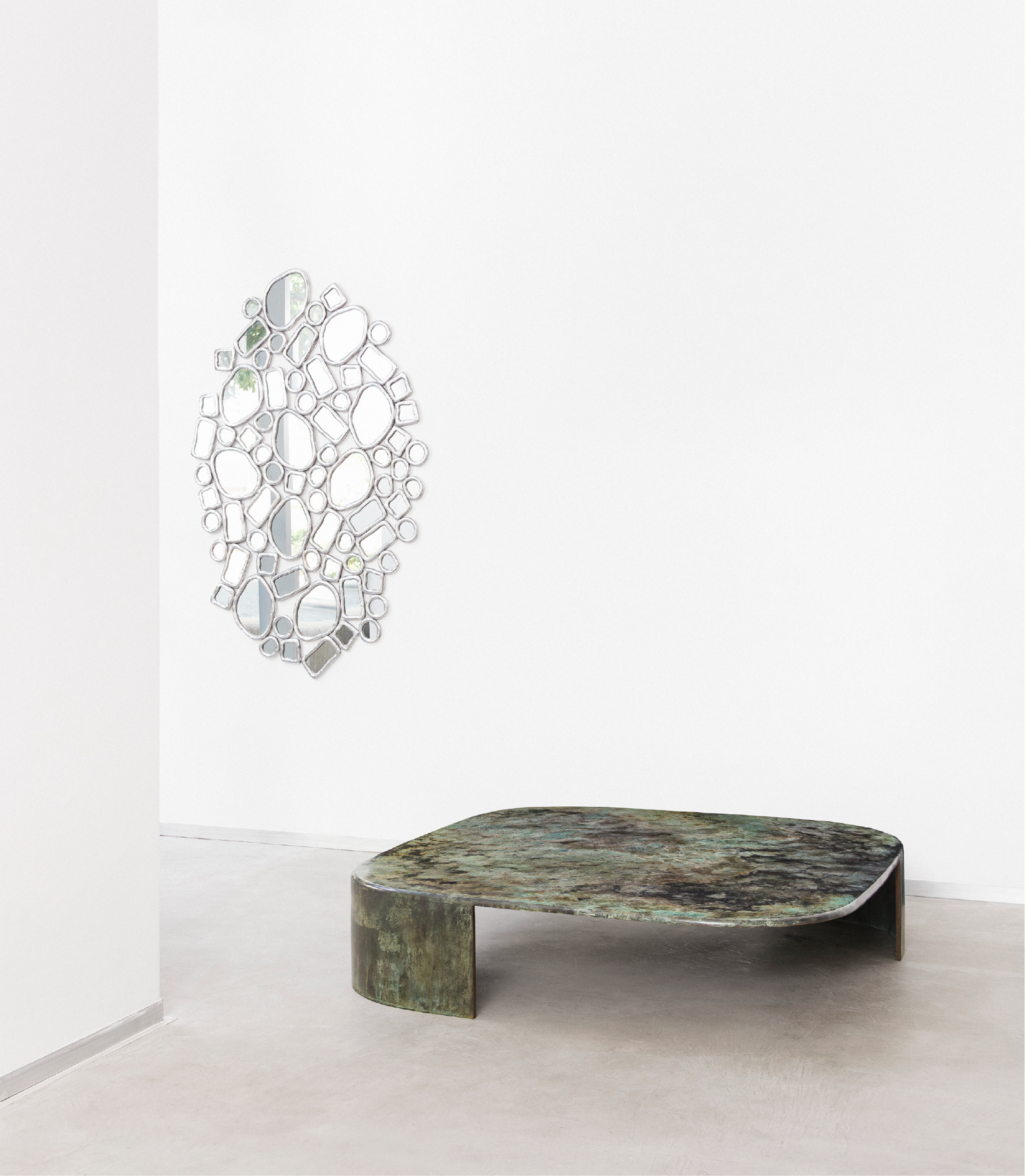
Lucas Recchia is a Brazilian designer whose practice unfolds at the intersection of material research and sculptural form. Trained as an architect, his work is grounded in the transformation of materials such as glass, bronze, and stone—explored through processes that reveal tension, distortion, and unexpected states of matter.
Over the past years, his work has been presented internationally through galleries and exhibitions in cities such as Milan, Paris, New York, and Dubai, consolidating his presence within the collectible design landscape. In 2025, he held his first solo exhibition at Design Miami/Paris—an important milestone in the development of a vocabulary that articulates technique, scale, and narrative.
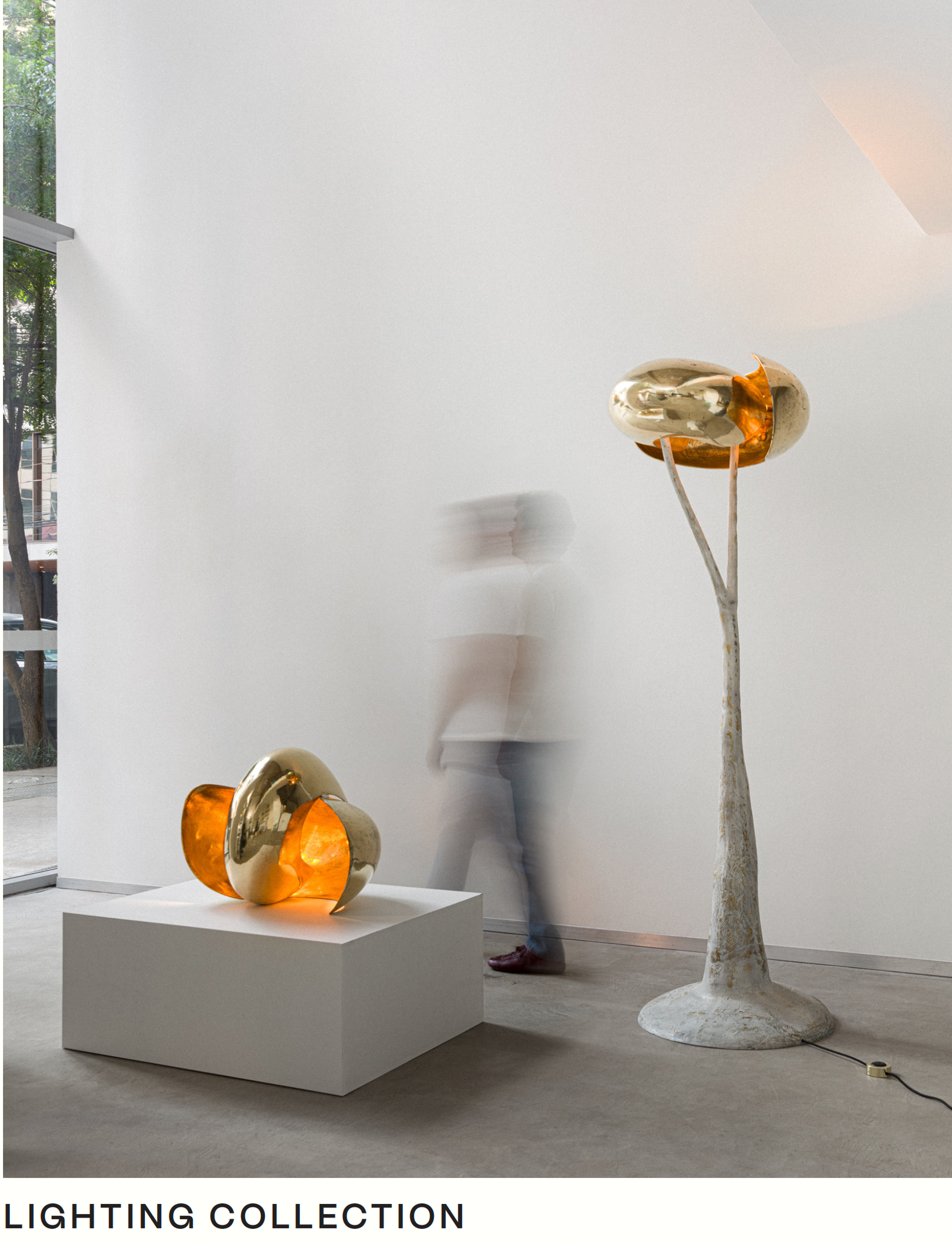
2026 marks a new chapter for the studio. Conceived as a synthesis of recent developments, it introduces a new body of work—his first lighting collection—while also presenting commissioned pieces developed for private clients in recent years. These works, previously seldom seen, reveal an expansion in both scale and complexity.
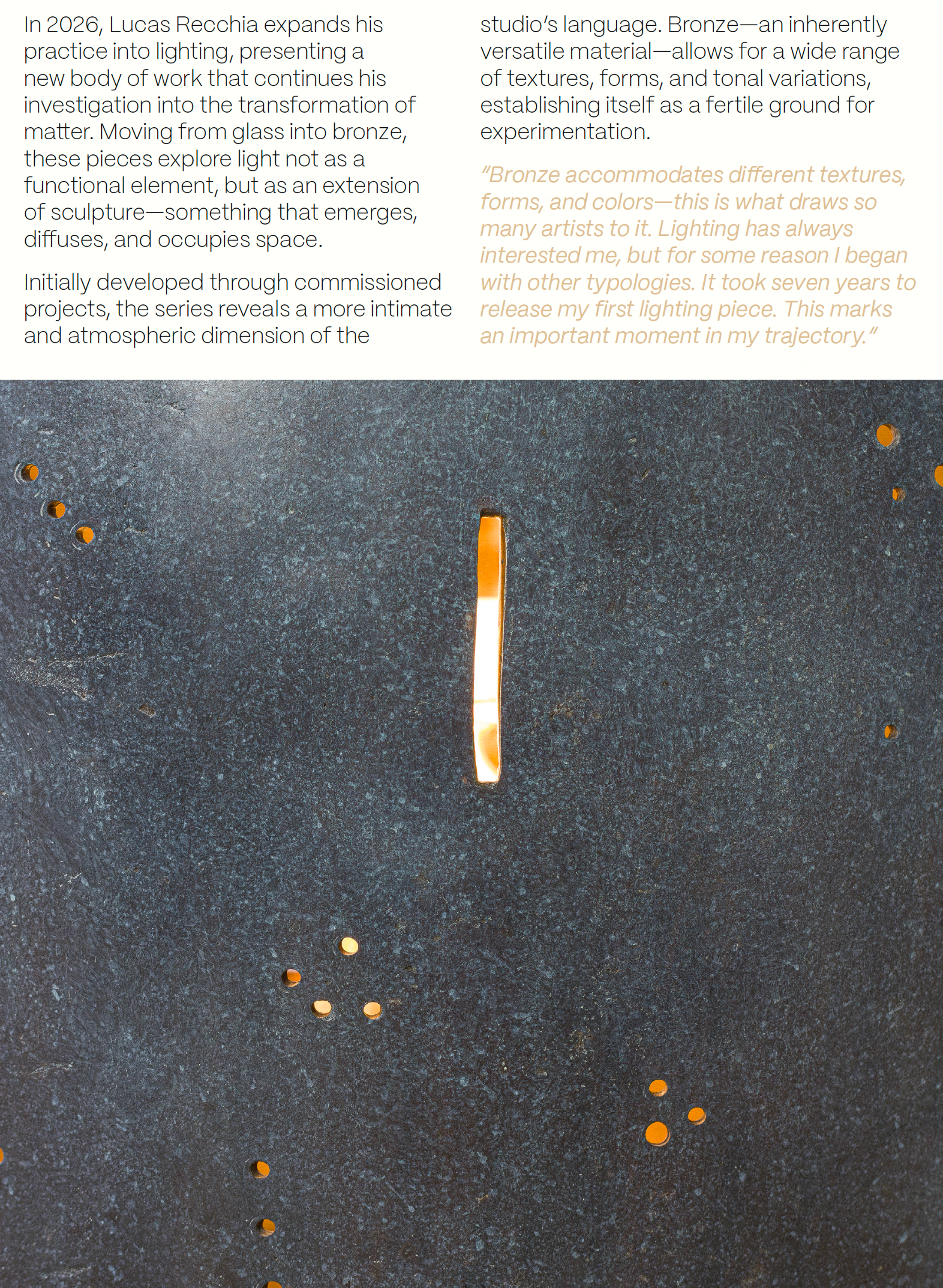
Rather than a rupture, this moment signals a deepening. Light is not treated as an accessory, but as a constitutive element of form—capable of activating and transforming matter. In parallel, the commissioned works reflect a growing architectural ambition, where objects begin to operate spatially
Lucas Recchia operates within the blurred boundary between collectible design and sculpture. Through materials such as glass, bronze, and natural stone, his work investigates processes of transformation that reveal textures, distortions, and form through a contemporary reading of matter.His works are internationally represented and held in private collections worldwide.
LUCAS
RECCHIA


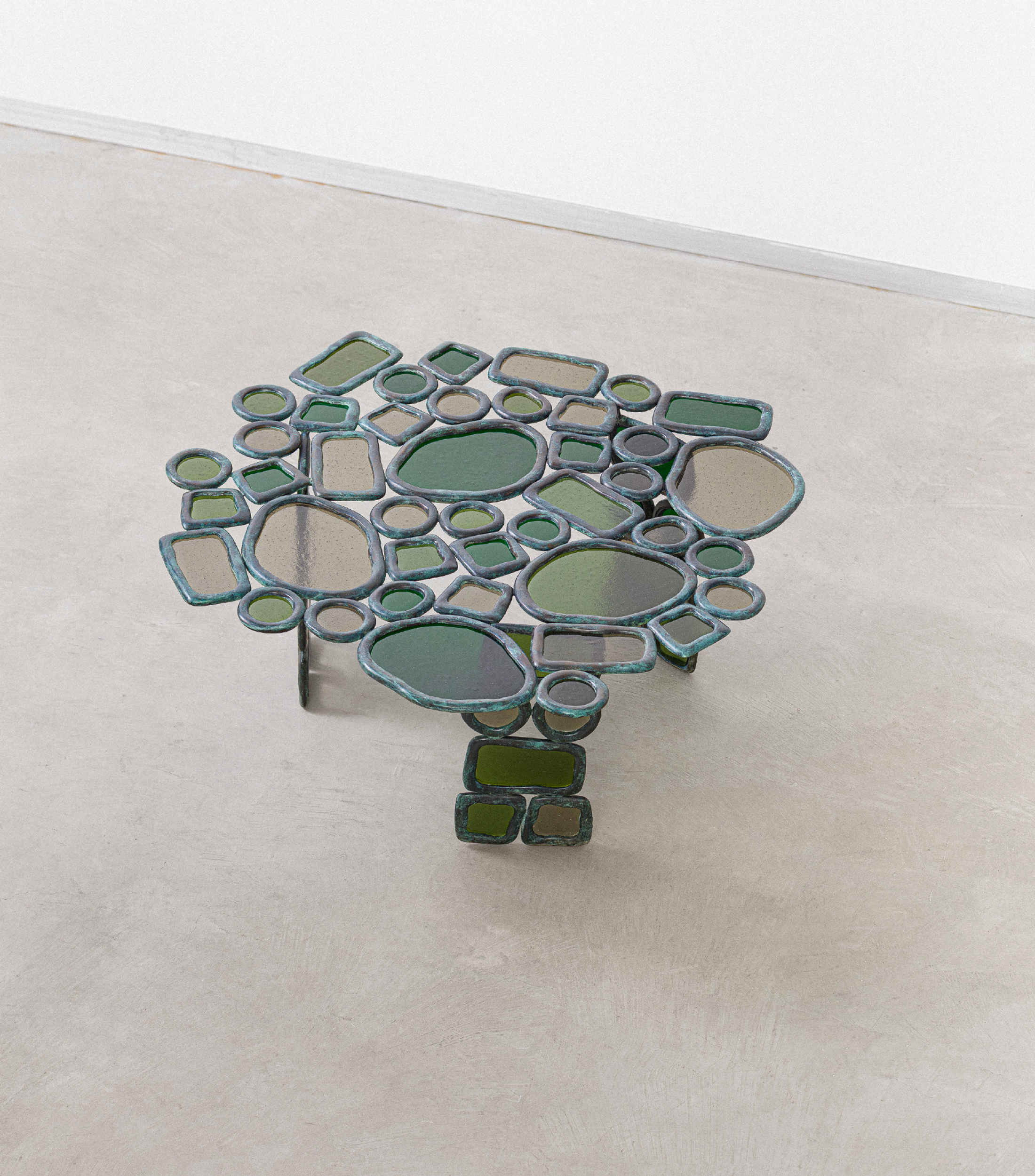
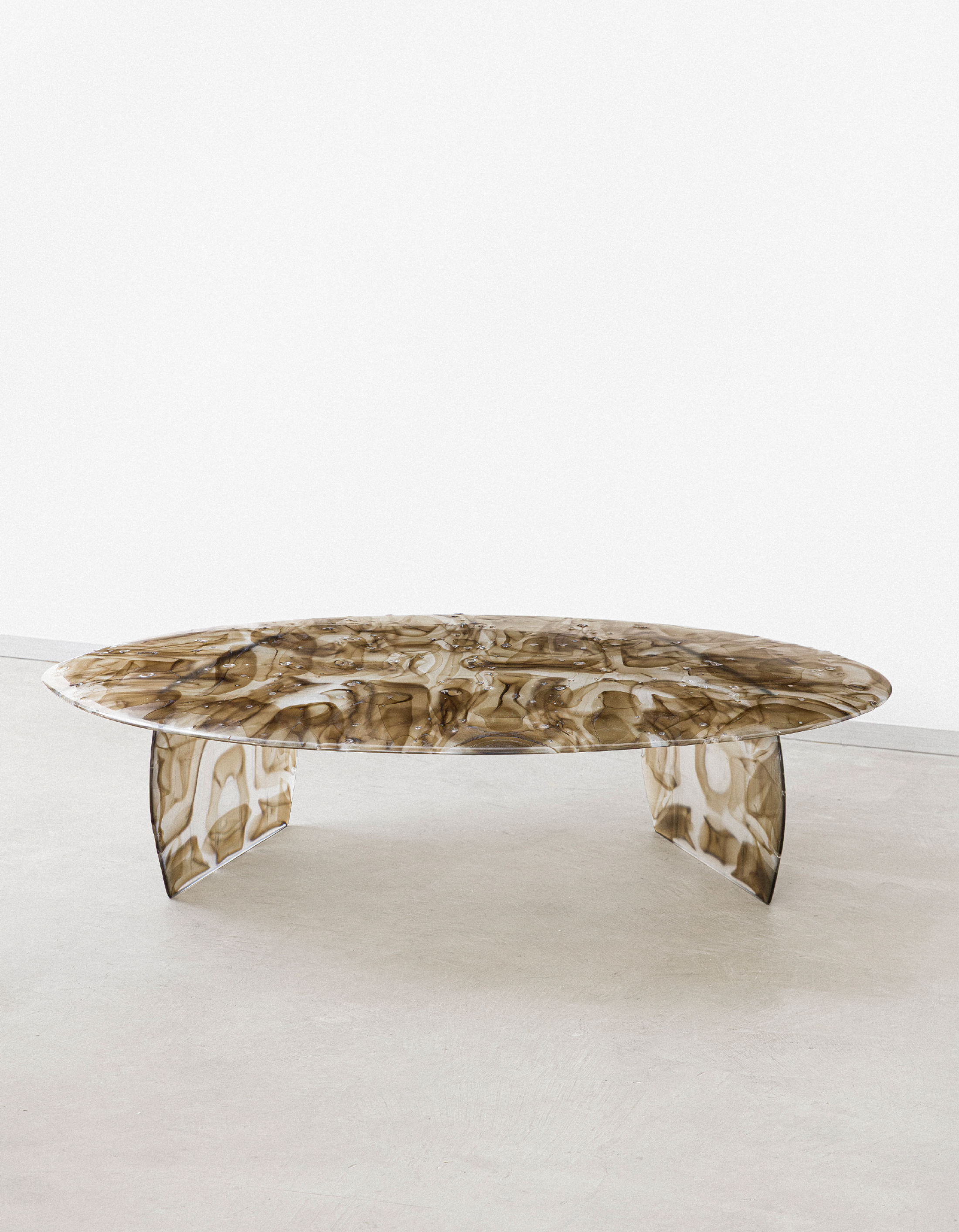
This latest phase of the studio’s practice marks the development of a more complex collection, grounded in an expanded spatial and material investigation. Building upon previous series such as Limen and Material Distortion, the studio revisits these languages through the introduction of new color palettes and refined finishes. The works reflect a shift in scale and intention—where forms become more fluid, compositions more architectural, and material transitions more deliberate.